




What is an AI receptionist for dental practices?
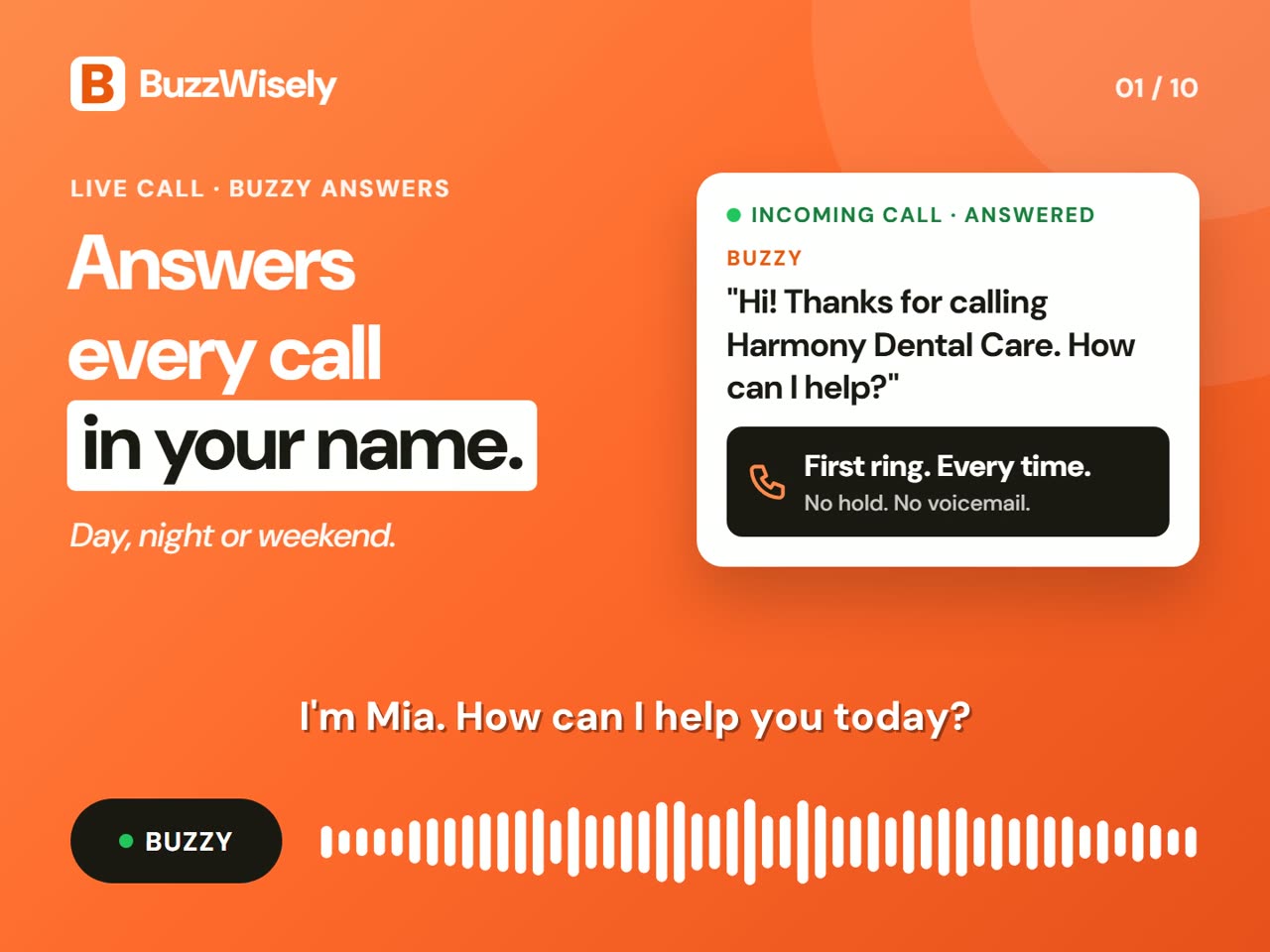
An AI receptionist is a voice system that answers your office phone, holds a real conversation with the caller, and completes the tasks a front-desk team would handle — booking appointments, scheduling hygiene recalls, capturing new-patient and insurance details, and routing urgent calls. For dental practices specifically, the AI is trained on dental terminology, PPO plan logic, and the rhythm of a real operatory. It writes every action back to your practice management software in real time — Dentrix, Eaglesoft, Open Dental, Curve, or Practice-Web — so the schedule and the patient record stay current without anyone typing.
The distinction worth drawing: an AI receptionist is not a phone tree (no "press 1 for hygiene"), not a traditional answering service (no human escalation for every call), and not a generic chatbot (no "I'm not sure how to help with that"). It hears intent, asks the right follow-up questions, and either completes the task or escalates to your team with a full transcript. The result is that routine inbound calls get handled without pulling your team away from the patients in front of them.
Why dental practices switch to an AI receptionist
The reality at most dental front desks: phones ring while the team is chairside, sterilizing, or processing checkouts. Hygiene coordinators chase no-shows at end of day. New-patient inquiries hit voicemail and call the next practice on Google. Insurance questions eat 30–60 minutes of staff time daily. The math of one missed new-patient call per business day, at industry-typical new-patient LTV ranges of $500–$1,500, runs into six-figure unrealized revenue per year — before counting hygiene recall lift or referral compounding.
Capture every new-patient call
New-patient acquisition is expensive — paid search costs $50–$150 per qualified call in most dental markets, and direct-mail ROI breaks down at the first missed inquiry. BuzzWisely answers in under 2 seconds, qualifies the patient, books or escalates, and writes the result to your PMS with the insurance details attached.
Reduce hygiene no-shows with automatic recall
Hygiene recall is the highest-leverage operation in most practices — a hygienist's chair time is fully bookable, and a no-show is 45–60 minutes of unrecoverable production. BuzzWisely runs the recall list automatically: outbound calls, SMS confirmations, rebooking within the recall window, and intelligent retry on no-answers.
Free your front desk from the phone
With the AI handling routine calls — recall confirmations, reschedules, common questions — your front-desk team can focus on patient greeting, same-day collections, treatment plan follow-up, and the work that actually drives production. Most practices using BuzzWisely don't replace their front-desk staff; they redeploy them. A common pattern: the existing receptionist takes on the treatment coordination and patient follow-up that the phones used to interrupt.
How an AI receptionist integrates with your dental PMS
The integration model matters more than the marketing copy on either side. BuzzWisely connects to Dentrix, Eaglesoft, Open Dental, Curve, and Practice-Web through each system's standard API or installer — not through database modification. During a call, the AI reads live availability across operatories and providers, holds the slot while the patient confirms, and writes the appointment and patient record back when the call ends. If the connection drops mid-call, the AI captures the booking, queues the write-back, and retries automatically — your PMS is never put into an inconsistent state.
What gets captured on a typical call: patient name, DOB, phone, insurance carrier and member ID, subscriber DOB, group number, reason for visit, and any clinical context the patient mentions (broken tooth, pain level, time since last cleaning). BuzzWisely captures those insurance details and routes new patients to your verification step. A signed BAA is included on every plan. See the HIPAA compliance guide for what this looks like at the practice level.
Pricing and ROI for dental practices
BuzzWisely pricing for a typical practice ranges from $289/month (Nectar tier, 775 minutes) to $389/month (Honey tier, fair-use unlimited). The comparison most practice owners run: a full-time receptionist costs $36,000–$54,000/year in salary (BLS wage estimates; actual rates vary by region and role), plus benefits, payroll tax, PTO coverage, and the recurring cost of turnover. Honey tier at $389/month ($3,890/year with annual billing) sits far below that, which is why most practices treat it as coverage for the calls their team can't get to rather than a replacement for anyone.
The ROI math that usually closes the decision: if BuzzWisely recovers one additional new patient per week at $750–$1,500 LTV, that's $39,000–$78,000/year of revenue from calls that were already coming in but weren't being answered.
What setup looks like for a dental practice
Most dental practices go from sign-up to live in under an hour (see the full setup walkthrough for the broader process). The actual steps: forward your existing office number to BuzzWisely (a 2-minute setting in your phone provider), connect your PMS through our installer or API (10–20 minutes depending on system), upload your accepted PPO list (15 minutes), and confirm your scheduling rules — block times, doctor preferences, hygiene intervals, emergency triage protocol. Your team doesn't have to learn any new software. The next call your number receives is the first one BuzzWisely answers.
Ongoing customization runs through your dashboard: adding new procedures, updating insurance acceptance, refining the conversation script for seasonal promotions, and reviewing call recordings + transcripts + PMS write-back logs. Most office managers spend 15–30 minutes per week on the dashboard; everything else runs in the background.
Is an AI receptionist right for your dental practice?
BuzzWisely is built for practices with 1–5 doctors, hygiene-heavy schedules, mixed PPO acceptance, active patient marketing (Google Ads, direct mail, referral programs), or any meaningful after-hours patient inquiry volume. It pays for itself fastest at practices currently missing 5+ calls per day to procedures, lunch, or after-hours. It's the right fit if your front-desk team is operationally stretched, your hygiene coordinator is doing recall calls at 6 PM, or your insurance coordinator is stuck on hold while the phones ring. For the vast majority of general and family practices, the math works.
Ready to see how it works for your practice? Book a demo.


